Why Astro
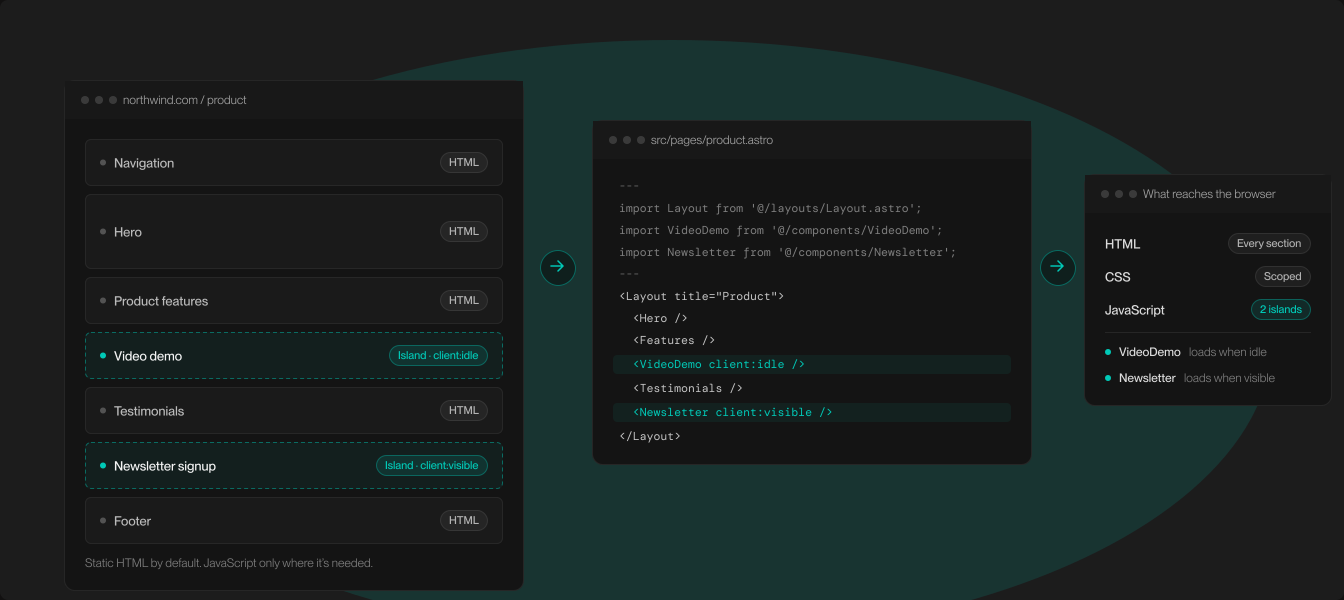
Astro is a modern web framework built for content-heavy sites. It sends HTML first and only loads JavaScript where a page actually needs it, so sites are fast by default and easy for search engines and AI crawlers to read.
Visual builders are great until you need custom functionality, complex content or full ownership of the code. Then plan limits, workarounds and platform lock-in start to get in the way.
I build Astro sites on a clean component system, connect a headless CMS so your team can edit content, and deploy to fast hosting you own.
What you get with an Astro build
A fast, well-structured site your developers can extend and your marketers can update.
Fast by default
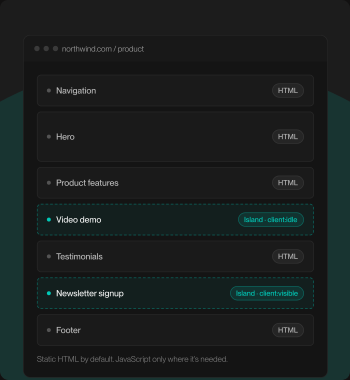
Pages ship as static HTML with JavaScript only where it’s needed, which keeps load times low and Core Web Vitals healthy.
A CMS your team can edit
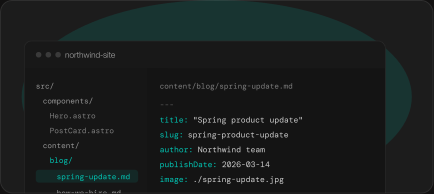
Content managed in a headless CMS such as Sanity, Storyblok or Keystatic, so marketers can publish without touching code.
Components you own
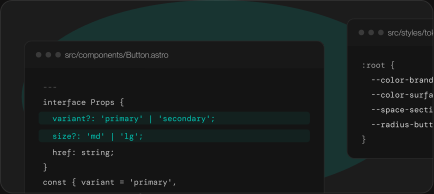
A reusable component library in your own repository, so you’re never locked into a platform or its plan limits.
SEO and structured content
Clean URLs, metadata, sitemaps and schema built into every template, with content collections that keep pages consistent.
How it works
Plan content and components
I’ll map your pages, content types and components, and agree which CMS and hosting suit your team.
Design and build in Astro
I’ll build the component library and page templates in Astro, connect the CMS and move your content across.
Launch and hand over
I’ll set up redirects and deploys, launch on your domain and hand over the code and documentation.
Is this the right fit?
This is for teams with developers on hand, or plans to grow them, who want a fast site they fully own and can extend without platform limits.
- Own your code, content and hosting.
- Get excellent performance without extra effort.
- Add custom features without workarounds.
- Keep a CMS for everyday content edits.
- Avoid per-seat or per-page platform limits.
If your marketing team wants to change layouts and build pages visually without a developer, Webflow is usually the better fit, and I’ll say so.
FAQs
What is Astro?
Astro is an open-source web framework for building fast, content-focused websites. It renders pages to HTML on the server or at build time and only loads JavaScript for the interactive parts of a page, an approach known as islands architecture. That makes Astro sites quick to load and easy for search engines to crawl.
Why build a marketing website with Astro?
Marketing sites are mostly content, which is exactly what Astro is built for. Pages load fast with very little JavaScript, which helps Core Web Vitals and SEO, and the code lives in your own repository, so you can add custom features, integrations and content types without platform limits.
Is Astro better than Webflow?
They suit different teams. Webflow is better when marketers want to design and build pages visually without a developer. Astro is better when you want full ownership of the code, custom functionality or the best possible performance, and you have a developer to maintain it. I build with both and will recommend the right one.
Can my marketing team edit an Astro website?
Yes, through a headless CMS. I connect Astro to a CMS such as Sanity, Storyblok or Keystatic, so your team edits text, images, blog posts and page sections in a visual editor. New layouts and components are handled in code.
Is Astro good for SEO?
Yes. Astro outputs clean, static HTML by default, so search engines and AI crawlers can read every page without running JavaScript. I add metadata, canonical tags, sitemaps, structured data and redirects to every template as part of the build.
Where are Astro websites hosted?
Astro sites can be hosted on Netlify, Vercel, Cloudflare or most static hosts. Static Astro sites are inexpensive to run because pages are served straight from a CDN. I set up hosting and automatic deploys on an account you own.
Which CMS works best with Astro?
It depends on your team. Sanity and Storyblok suit teams that want a polished visual editor and structured content, while Keystatic or Decap keep content in the repository with a simple editing interface. I’ll recommend one based on how often you publish and who edits the site.
How long does an Astro website take to build?
It depends on the number of page templates, how many content types the CMS needs and any custom features. A focused marketing site is quicker than a large site with complex content and integrations. You’ll get a timeline with your fixed-price quote.
“We launched a new specialist, boutique tax advisory business in March 2025 and Matt created our website. Matt’s service and end product was exceptional, meeting with our design and timing requirements and being highly responsive during the process. Would highly recommend.”
James PilbeamLumentis Partners


